Truck Road Service: What to Expect and How to Choose
Quick Summary
Truck road service is on-site repair and recovery help for a commercial vehicle that breaks down away from its home base, such as on a highway shoulder, at a truck stop, or at a job site. Many fixes happen on the spot, while a tow goes to a shop when the truck cannot be moved or the repair needs a lift.
Many roadside repairs are temporary fixes that get the truck safely to a shop.
Check dashboard warning lights and air pressure gauges before you call for help.
Give dispatch your exact location, the truck's make and model, and the symptoms.
Get the tow quote and the repair quote as separate line items before you decide.
Verify a provider's heavy-duty equipment, insurance, and response times before you need it.
Stranded with a semi truck?
24/7 Big Rig Repair and Road Service provides emergency roadside repair and towing around the clock.
Table of Contents
What Truck Road Service Covers
Truck road service is the on-site repair and recovery help a commercial vehicle gets when it breaks down away from its home base. Most calls involve a semi or heavy-duty truck stopped on a highway shoulder, a truck stop, or a job site.
The American trucking industry is large and it depends on these services. Trucks carry a large share of the nation's freight, and when a truck goes down, the cost goes well beyond the repair bill. When a truck goes down, the cost goes well beyond the repair bill.
Inspections are another reason roadside help matters. Out-of-service orders tie a truck to the spot until the problem is corrected, so a fast, competent response can keep a small problem from becoming a long shutdown.
Common roadside repairs handled on site
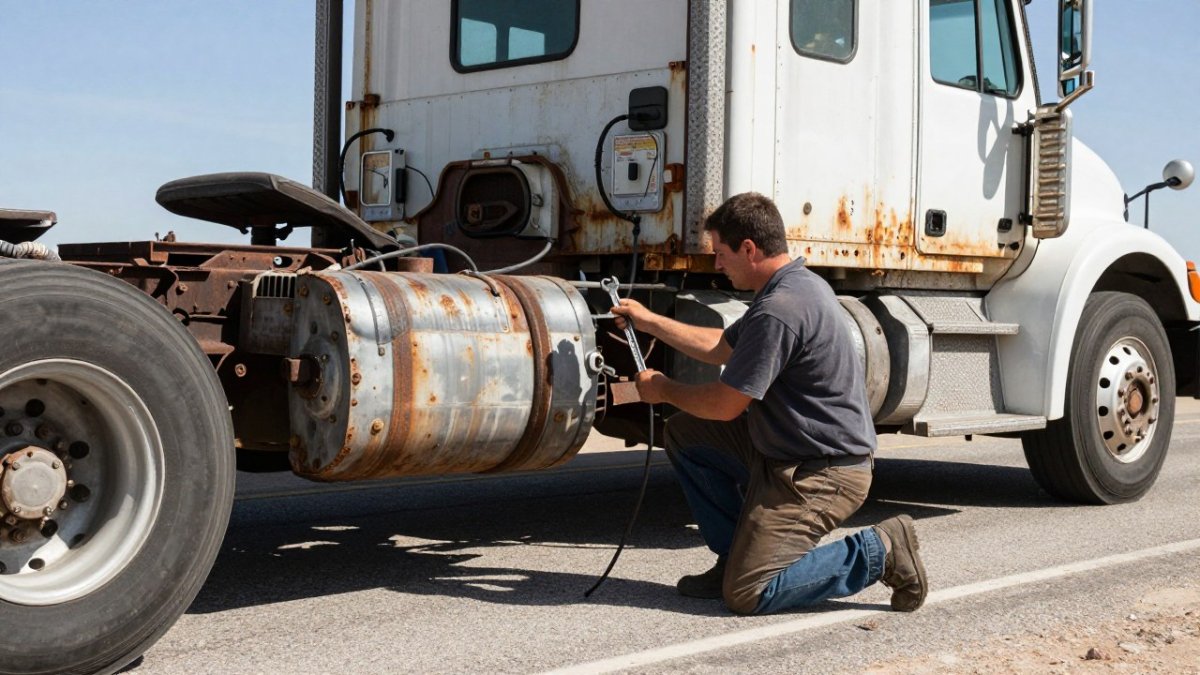
Many mobile repairs can be handled without a shop lift. Typical roadside calls include dead or weak batteries, jump starts, air leaks, hose and fluid leaks, electrical faults, brake adjustments, tire repair, and engine diagnostics. Trailer issues such as landing gear and lift gate repairs are also common.
Many fixes are temporary but get the truck safely to a shop. A hose clamped and replaced on the roadside is often enough to reach the next stop. Be clear with the technician about whether you need a permanent repair or a bridge to a shop.
Where mobile repair stops and towing starts
Mobile repair works when the problem can be fixed where the truck sits. A tow is needed when the truck cannot be driven or moved safely, when the repair needs a shop lift or specialized equipment, or when the truck sits in a location that is unsafe to work in.
Ask the dispatcher early whether the job can be completed on site. If it cannot, a tow to a repair facility is usually the next step. Get the tow and repair quoted separately so you know what each part of the job costs.
Troubleshooting Before You Call for Help
A few checks before you call can save time and help the dispatcher send the right equipment. Start with your dashboard warning lights and note which ones are on. Check air pressure gauges, since low air can lock the brakes.
Next, check the obvious items. Confirm the battery terminals are clean and tight. If the truck is hot, check coolant levels only after the engine has cooled. Walk the tires and note any that look low or damaged.
Do not try repairs that could cause injury or damage. Stop, secure the vehicle, and place warning triangles or flares according to your company's safety procedures. Troubleshooting should inform the call, not replace the technician's work.
Running a few checks before you call can save time, and the table below summarises the most useful ones.
Check | What to look for | Why it matters |
Dashboard warning lights | Note which lights are on | Helps the dispatcher send the right equipment |
Air pressure gauges | Low air pressure | Low air can lock the brakes |
Under the truck | Fresh fluid leaks | Note the color and location |
Battery terminals | Clean and tight | Common, simple fix |
Coolant level | Check only after the engine cools | Avoids burns and inaccurate readings |
Tires | Low or damaged tires | Walk the tires and note any problems |
Events before breakdown | Noise, smell, or loss of power | Helps the technician narrow the cause |
Mobile Truck Repair: How Response Works
When you call, the dispatcher typically asks for your location, the truck's make and model, the symptoms, and whether the truck is drivable. Accurate answers speed up the response. Once a technician is assigned, they head to your location with the tools and parts most common for that type of truck.

Response times depend on distance, traffic, and how many calls are open. Ask the dispatcher for an estimated arrival time and check in if it changes. 24/7 Big Rig Repair and Road Service offers 24/7 emergency roadside assistance with fast response times.
Safety steps while you wait
While you wait, keep yourself safe. Move the truck as far off the travel lane as you can if it is drivable. Turn on hazard lights and set out warning triangles or flares. Stay inside the cab with your seat belt on if traffic is fast, unless you can safely stand well clear of the road. Do not stand between the truck and passing vehicles.
If you smell fuel or see smoke, leave the cab and move to a safe distance. Call emergency services if there is a fire or injury. Keep your phone charged and stay reachable so the technician can find you.
What to tell dispatch
Give the dispatcher a clear picture so the right help arrives the first time. Share your exact location, including highway, mile marker, exit, or nearby landmark. Give the truck's make, model, and year, the trailer type if one is attached, and the symptoms you noticed. Say whether the truck is drivable and whether any cargo is at risk.
Also share your contact number and the best way to reach you. If you have a fleet account or policy number, have it ready.
Semi Truck Roadside Assistance and Semi Truck Towing
Semi trucks are heavier, more complex, and harder to move than a passenger vehicle, so roadside help for them requires heavy-duty equipment. Depending on the job, a technician may need a service truck with air-brake tools, a heavy tow vehicle, or a flatbed for a disabled tractor. Confirm the provider can handle your truck's weight class before you accept the service.
Semi truck towing is often needed after a severe breakdown or a repair that cannot be completed on site. Ask whether the provider handles both the on-site repair and the tow, or whether you will need to coordinate a separate towing company.
Truck Roadside Repair Costs and What Affects Your Bill
Roadside pricing depends on the job, so ask for an itemized estimate before you approve work. Pricing depends on the repair needed, the time of day, parts required, and distance traveled. For current rates, check the 24/7 Big Rig Repair and Road Service pricing page or request a quote.
The cost components behind a quote
Ask up front how any service-call charge is handled if the repair cannot be completed on site, and confirm how waiting time and return trips are billed.
Towing charges and when a tow is the better call
Ask whether a tow quote includes hookup, per-mile charges, and any recovery or winching fee, so you can compare it against the on-site repair estimate.
Compare the on-site repair estimate against the combined cost of a tow plus shop repair. An on-site fix that gets the truck to its destination can be cheaper and faster, but when the failure needs a shop lift, a part the service truck does not carry, or a repair that cannot be done safely where the truck sits, the tow is usually the lower-risk choice. Get both numbers before you decide, and ask the provider to quote the tow and the repair as separate lines so you can see what each part of the job costs.
Choosing and Verifying a Roadside Provider
A roadside provider is only useful if it can actually handle your truck when it is stopped. Build a short list before you need one, and verify each provider against the same checklist so the comparison is fair. The goal is to confirm heavy-duty capability, coverage, response expectations, and payment terms in advance, not during a breakdown.
A verification checklist to run before you commit
Ask each provider the same questions and write down the answers:
Weight class and equipment. Confirm the provider services your truck's gross vehicle weight and trailer type, and ask what heavy-duty wreckers, service trucks, and tire equipment it dispatches. A provider that handles light-duty pickups may not have the air-brake tools or the tow capacity your tractor requires.
Service scope. Confirm whether the provider does on-site repair, towing, tire service, trailer repair, and after-hours electrical and brake work, or whether it subcontracts some of those. A handoff to a second company adds delay.
Insurance and licensing. Ask for a certificate of insurance and confirm the coverage is current. Verify the company is licensed to operate in the states on your route if you run interstate.
Response time. Ask for a typical arrival window in your operating area at the times you actually run, including nights and weekends. A 24/7 phone line means nothing if the nearest technician is hours away.
Billing and payment. Confirm the call-out fee, labor minimum, mileage policy, after-hours premium, and accepted payment methods. Ask whether the provider bills fleets on account or requires payment at the scene.
Dispatch information. Ask what the dispatcher needs from you and whether the provider gives you a technician name and an updated ETA.
Watch out: a provider that cannot state its heavy-duty weight limit or produce a current insurance certificate is a risk you do not want to discover at the roadside.
Keep a pre-vetted list ready
Store two or three verified providers in your phone and dispatch system, organized by the routes you run. Note each one's coverage area, after-hours number, and billing terms so a dispatcher can reach the right company without a search. Recheck the list periodically, because coverage areas, phone numbers, and insurance can change. A pre-selected, verified contact is the difference between a short delay and a long one.
Booking Your Next Roadside Call With 24/7 Big Rig Repair and Road Service
When you need help, the fastest path is a direct call. 24/7 Big Rig Repair and Road Service provides emergency roadside assistance, diesel truck repair, and preventive maintenance with fast response times, so you can get back on the road with less downtime. Call the dispatch line, give your location and symptoms, and ask for an estimated arrival time.
Fleet managers can also book preventive maintenance to catch problems before they strand a truck.
Last Updated: November 12, 2026
Frequently Asked Questions
What does truck road service include?
Truck road service covers on-site repairs and help when a commercial truck breaks down away from a shop. Common roadside work includes repairs that can be completed without a shop lift. Services that need a shop, such as major transmission or rear-end work, usually require towing. Ask a provider which repairs they can complete on the roadside before you dispatch, so you know whether a tow will be needed.
How do I find truck road service near me?
Search for providers that list 24-hour or emergency mobile repair and confirm they cover your route and the area where you are stopped. Call providers and ask about response time to your location, technician certifications, and whether they dispatch to highways. Keeping two or three verified numbers saved in your phone helps you act quickly when a breakdown happens.
How much does emergency truck roadside repair cost?
Emergency roadside pricing depends on the repair needed, the time of day, parts required, distance traveled, and whether the job can be finished on site. Request an itemized estimate before work begins, and ask how any service-call charge is handled if the truck must be towed to a shop. For current pricing, check 24/7 Big Rig Repair and Road Service's pricing page or call for a quote.
When should I call for a tow instead of roadside repair?
Call for a tow when the problem is too extensive to fix safely on the shoulder, such as major transmission failure, severe engine damage, or a rear-end or drivetrain problem that needs shop equipment. A tow is also the right call if the truck cannot be moved safely or the repair would keep you stopped in traffic for a long time. Ask the technician which option makes sense after a basic inspection.
Comments